Where two languages go wrong on the phone
- The small words. Con and sin, with and without, change the whole dish, and a noisy kitchen swallows them.
- Numbers. Dos and doce, seis and siete, sound close on a bad line. Repeat every number.
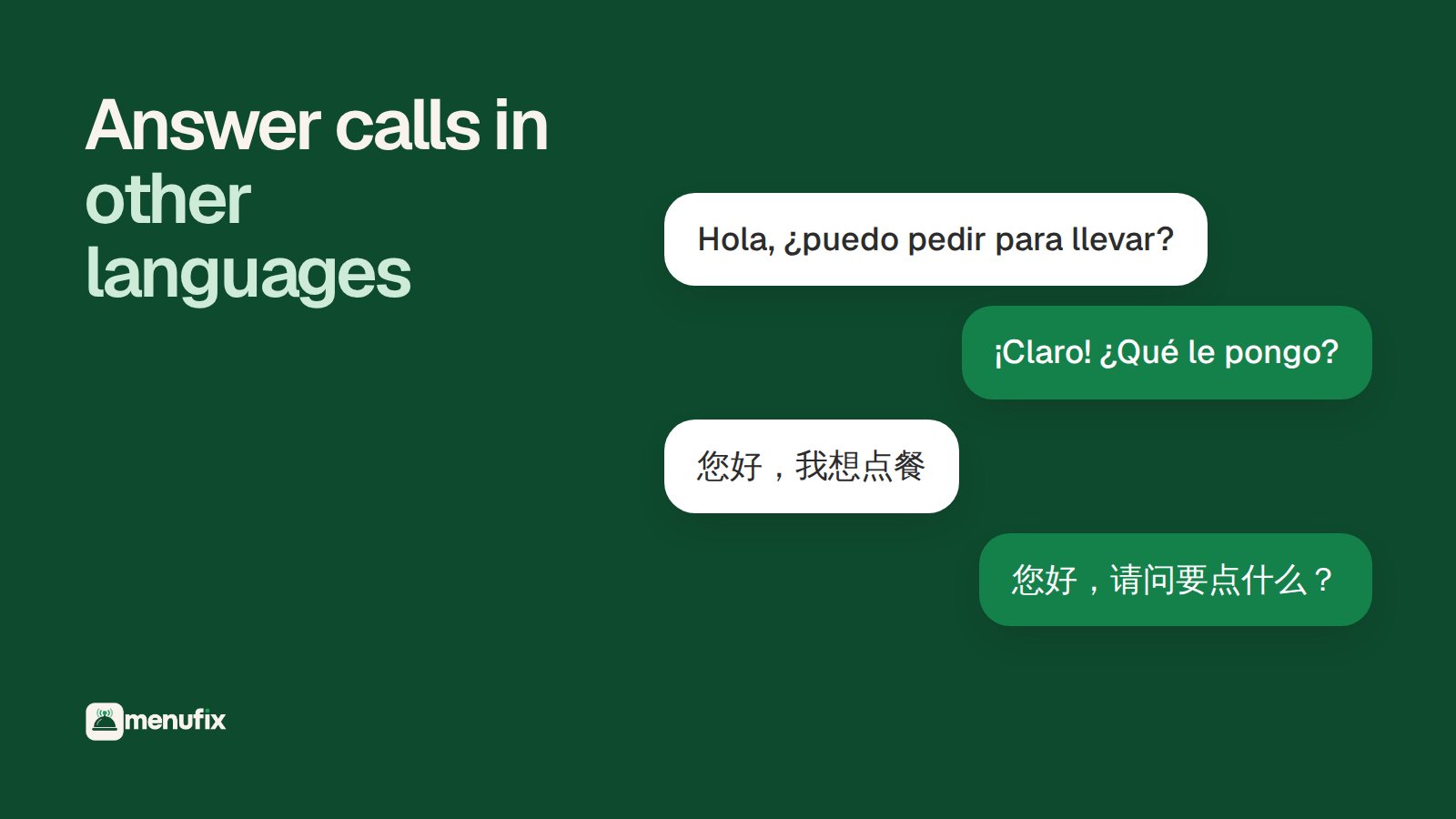
- Pickup or here. "Para llevar" and "to go" are pickup. "Para comer aquí" is a table.
- The choice. Corn or flour, red or green, which meat, which beans. A menu in one language often hides the question.
- How spicy. "Que no pique" is an order, not a comment. Write it.
- Names. Ask for the name, spell it back, and take the phone number.
Write the ticket in one language
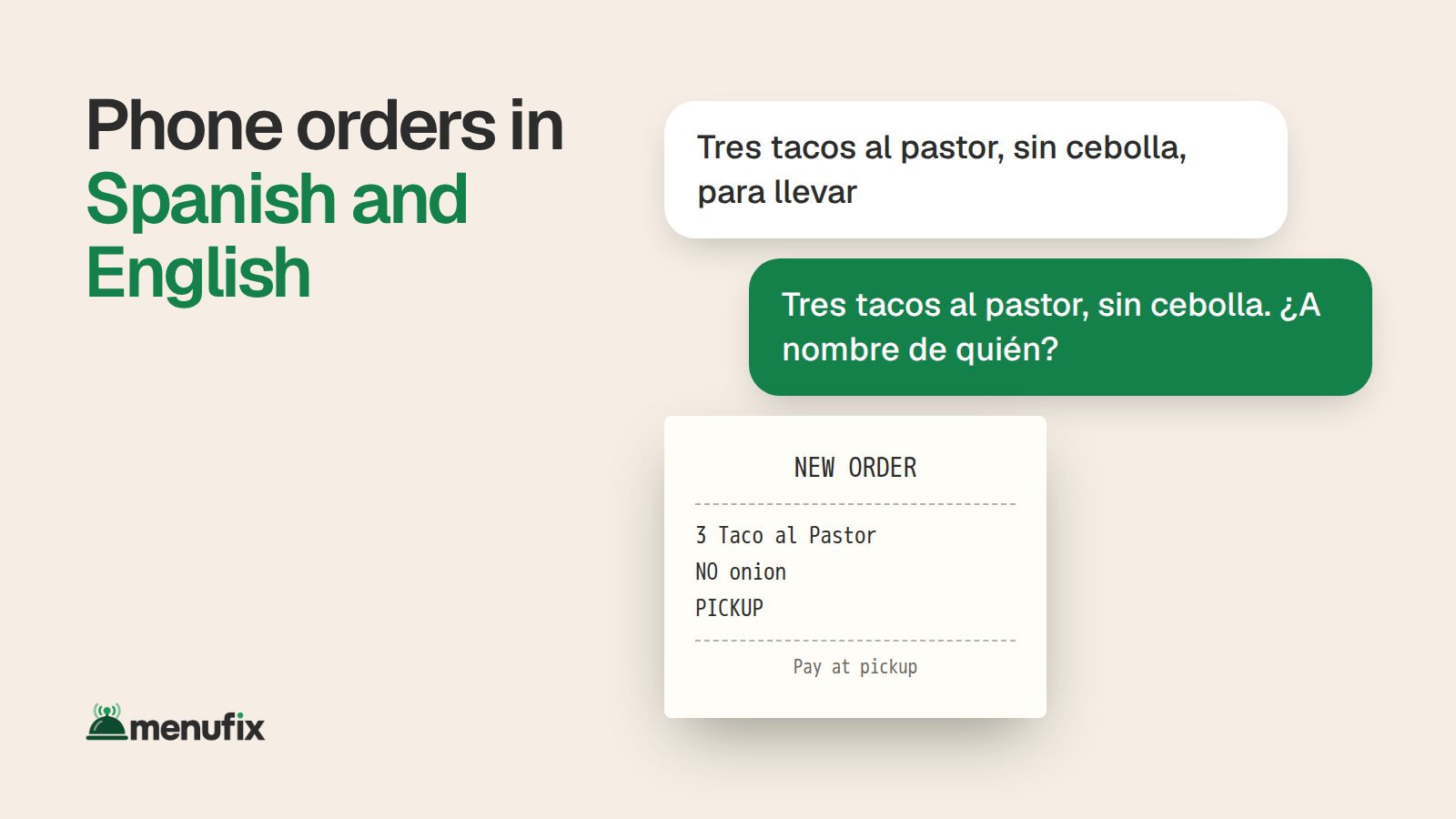
The caller chooses the language of the call. The kitchen chooses the language of the ticket. Pick one, put it on the wall, and keep the dish names exactly as on your menu. Short marks help: NO onion, XTRA guacamole, SIDE salsa. An example:
| The caller says | The ticket says |
|---|---|
| Tres tacos al pastor, sin cebolla, y una horchata grande para llevar | 3 Taco al Pastor, NO onion. 1 Horchata, large. PICKUP |
| Un burrito de carne asada con frijoles negros, que no pique | 1 Burrito Carne Asada, black beans, MILD |
| Two combos, one with rice only, and extra green salsa on the side | 2 Combo. 1 with rice, NO beans. XTRA green salsa, SIDE |
| Una orden de flautas, mitad de pollo y mitad de papa, with everything | 1 Flautas, half chicken, half potato, all toppings |
12 phrases for the person at the phone
For a team member who speaks a little Spanish. Print it and put it next to the phone.
| English | Spanish |
|---|---|
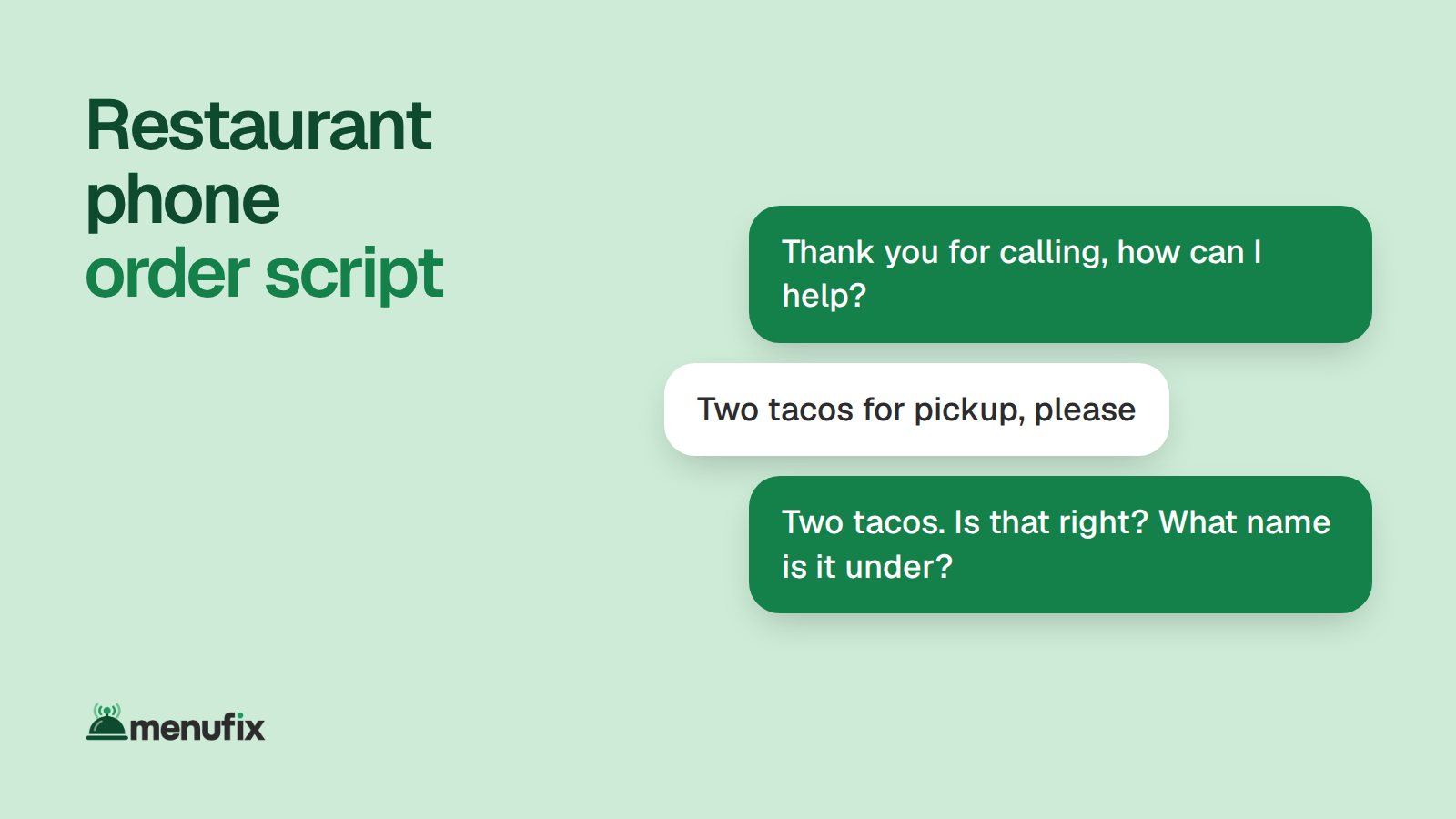
| Thank you for calling. How can we help you? | Gracias por llamar. ¿En qué le podemos ayudar? |
| Is it for pickup? | ¿Es para llevar? |
| What would you like to order? | ¿Qué le gustaría ordenar? |
| How many? | ¿Cuántos? |
| Which meat? | ¿De qué carne? |
| Corn or flour tortilla? | ¿Tortilla de maíz o de harina? |
| Black beans or pinto beans? | ¿Frijoles negros o pintos? |
| With everything, or without something? | ¿Con todo o sin algo? |
| Mild or spicy? | ¿Suave o picante? |
| Let me read it back. | Le repito su orden. |
| What name is it under, and your phone number? | ¿A nombre de quién, y su número de teléfono? |
| It will be ready in 20 minutes. You pay here. | Estará lista en 20 minutos. Se paga aquí. |
When the question is about an allergy, stop and get someone who knows the kitchen: see allergy questions on the phone.
Make your menu easy in both languages
- Keep the name, add the meaning. "Chilaquiles Verdes" in the name, "crisp tortillas in green salsa" in the description.
- Write the choices as a list. Meat, tortilla, beans, salsa, with the same words everywhere.
- Say what comes with it. "With rice and beans" saves a question on every call.
- Price the extras. Guacamole, cheese, sour cream: a caller in any language asks how much.
6 calls to test before you trust an AI with Spanish
Have somebody who speaks Spanish at home make the calls, not somebody reading from a paper. Write down what should land on the ticket before you call.
- A whole order in Spanish, with a "sin" and an "extra".
- An order that starts in English and ends in Spanish.
- A sentence in both: "dos burritos de chicken, one without beans".
- A number test: twelve tacos, then two tacos.
- A dish that is sold out today.
- "Quiero hablar con una persona." It should put the caller through, or take a message.
What AI phone services say about Spanish
From each company's own website, read on 25 November 2026. Slang AI: bilingual support, in Spanish, on Core and 97 languages on Premium. Loman: 55 languages, and the ticket goes to the POS in English. Maple: 13 languages, Spanish among them; it says its help pages label this beta and advise one main language plus at most one more. More of them in phone answering in other languages. A list of languages is not a test: call and order.
How ours takes an order in Spanish
When your line is busy or nobody picks up, our AI phone assistant for restaurants answers in the caller's language when it can, asks for the dish's choices, reads the order back and says the total from your menu. The dish names stay as they are on your menu. The order rings on your tablet, and one tap prints a kitchen ticket.
You write your own rules, in English or in Spanish, one in each box: for example "Los burritos llevan una sola carne" or "Extra guacamole is one price, say it". The portal shows you under each rule what the assistant understood, asks when a rule is not clear, and you can try a call in writing before any customer hears it. Hear a Spanish call on our page in Spanish, and read one on our page for Mexican restaurants and taquerias.
It is for restaurants in the United States for now: 7 days free on your real line (up to 100 calls), no card to start, then US$149 a month for up to 300 calls.
Hear ours first
Book on our free demo page and your own assistant calls you back as your restaurant, with your real menu and prices, in about a minute. Then you decide. Everything it does is on our AI phone assistant for restaurants page. And if you also sell on Uber Eats, our free Uber Eats page check shows what to fix first on your page.